The Romanian Competition Council’s investigation into the seed and crop-protection products market has officially drawn the attention of the European Commission. In a response sent to one of the companies under investigation, Brussels confirmed that it will examine allegations concerning possible procedural issues and the way the Romanian inquiry is being conducted.
The case, which has become one of the most contentious economic disputes in Romania’s agribusiness sector, is entering a new phase just weeks before the expiration of Bogdan Chirițoiu’s third term as president of the Competition Council at the end of June.
According to information published by Agroinvestigatii.ro, several Romanian companies involved in the investigation claim that the inquiry has been accelerated in recent months and that pressure exists to finalize the case before a potential change in the institution’s leadership.
The European Commission’s response
In its official reply to one of the investigated companies, the European Commission’s Directorate-General for Competition (DG COMP) confirmed that it is monitoring the situation and will discuss the matter with the Romanian competition authority.
“In response to your letter of 28 April 2026, in which you raised procedural and substantive concerns regarding an investigation conducted by the Romanian Competition Council (…) We have taken note of these concerns and will take them into account in our exchanges with the Competition Council,” the document reviewed by Agroinvestigatii.ro states.
Brussels also noted that DG Competition works continuously with national competition authorities through the European Competition Network and exercises its powers under European Regulation 1/2003.
In practical terms, the European Commission has officially confirmed that it is monitoring the Romanian case and the relationship between the Competition Council and the companies under investigation.
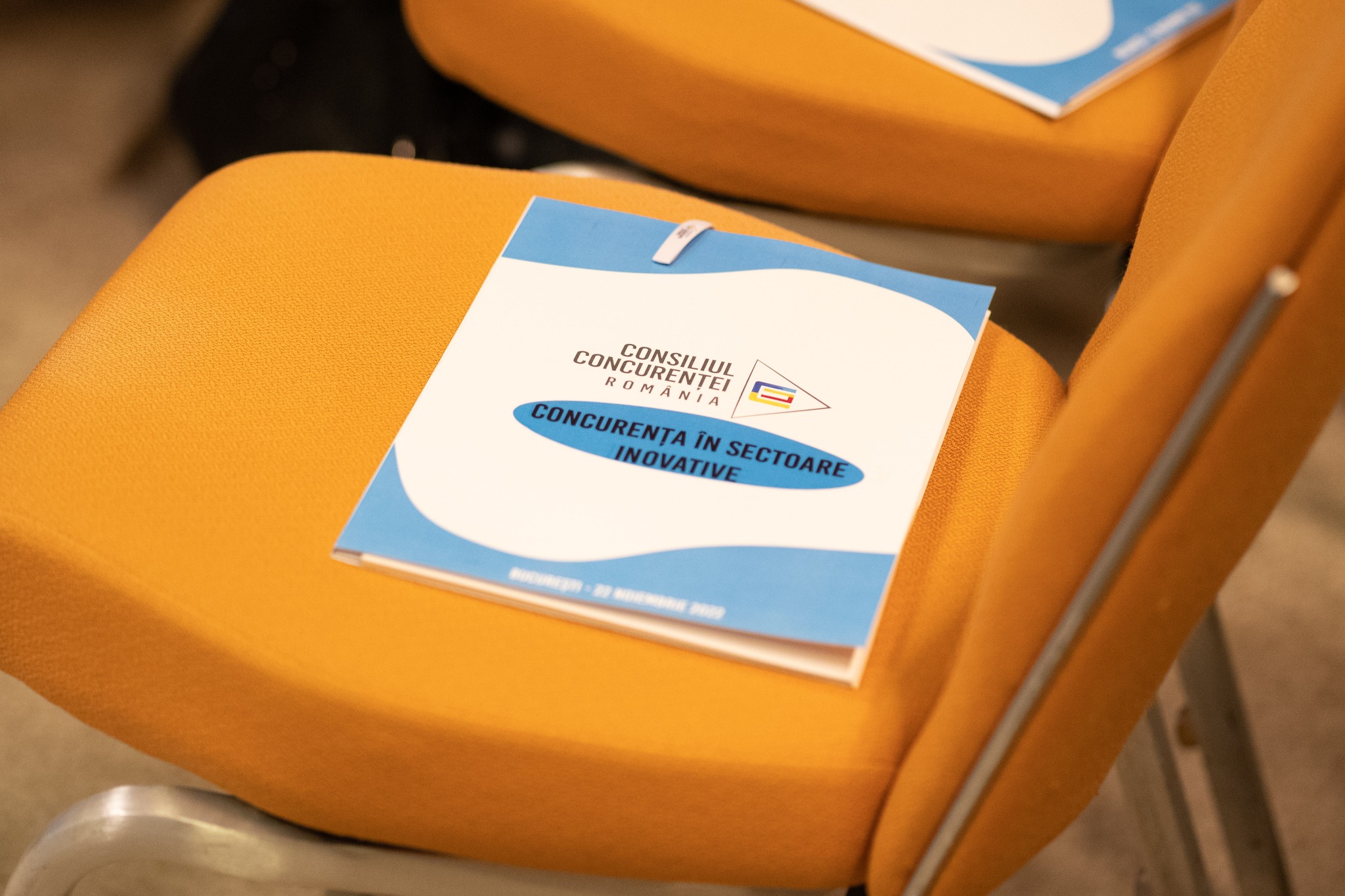
The Competition Council is the institution responsible for enforcing European competition rules in Romania and functions as the local extension of DG Competition. The authority cooperates directly with Brussels in major investigations involving cartels, abuse of dominant market positions, and anti-competitive practices.
The complaint submitted to Brussels
The complaint sent to the European Commission was filed by one of the companies targeted in the seed-market investigation.
According to documents reviewed by Agroinvestigatii.ro, the company alleges both procedural shortcomings and a fundamental shift in the direction of the investigation.
The company claims that the inquiry originally began as an examination of possible anti-competitive practices by major international seed and pesticide producers, but later became focused almost exclusively on local distributors.
Company representatives refer to “procedural irregularities,” a lack of “equal treatment,” and a “fundamental mismatch” between the legal theory used by the Competition Council and the actual functioning of Romania’s seed market.
These allegations come after Agroinvestigatii.ro reported growing dissatisfaction among Romanian distributors, who argue that large multinational companies have received preferential treatment during the investigation.
The distributors claim that Romanian firms face combined fines of nearly €20 million, while some multinational groups are expected to receive significantly lower penalties.
Corteva’s voucher system at the center of the case
At the heart of the investigation are commercial systems based on vouchers and discount programs used by major international suppliers of seeds and crop-protection products, particularly Corteva Agriscience.
According to documents submitted to Brussels, distributors argue that prices and commercial terms were established directly between suppliers and farmers through contractual mechanisms and voucher systems controlled by the producers themselves.
“The main commercial parameters (…) are established directly between the supplier and the farmer through a specific instrument known in the industry as a voucher,” the complaint submitted to the European Commission states.
The companies under investigation argue that distributors had only limited commercial autonomy and that refusing to participate in these systems could effectively mean exclusion from the market.
One of the most sensitive allegations in the document concerns the possibility that the investigation could produce the exact opposite of its intended effect: reducing competition and strengthening the position of major global agribusiness groups.
“The investigation, in its current form (…) will gradually reduce the number of independent distributors capable of operating in Romania,” the document warns.
Dispute over the investigation report
Another controversy concerns the investigation report that is expected to serve as the basis for future sanctions.
Representatives of one investigated company claim that the document was not sent to the European Commission, despite this being standard practice in major competition cases.
“We received the investigation report under which we will be sanctioned, but this report was not sent to the European Commission, as is normally the procedure. They were surprised by this way of working, which suggests a sense of urgency,” a representative of one of the investigated companies told Agroinvestigatii.ro.
At the same time, the Competition Council rejects the allegations and maintains that the investigation is being conducted in full compliance with both Romanian and European legislation.
Although Brussels has not announced the opening of its own investigation, the official confirmation that DG Competition is monitoring the case represents a significant development in what has become one of the most important and controversial economic investigations in Romania in recent years.